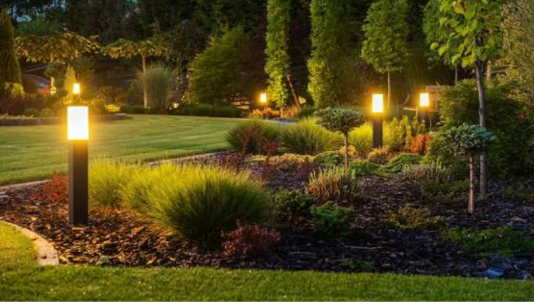
Garden light design, this is basically the planning part behind where lights should go, how they get placed, and for what reason, inside an outdoor space. Just switching a bulb on after dark is not really the point of it. Which paths need guiding, which trees deserve some glow, and how much brightness actually suits the space, these things need deciding. When fixture placement, brightness, beam direction and colour tone come together in the right way, the garden does not only get lit, it gets shaped properly. With a layout that has been thought through, plants and pathways start appearing intentional once the sun goes down, not like bulbs randomly stuck into the ground.
What Is the Purpose of Lighting in a Garden?
More than a single job gets done by outdoor lighting at once. On the practical side, walkways, steps and driveways stay safer, because shadows and uneven patches that people usually trip over get reduced by it. Something for the eye to rest on also gets given, whether that is a tree trunk, a small pond, a bench, or an ornament which would disappear otherwise once darkness comes. Then there is the mood part as well. Near a patio, warm and low light tends to make evenings feel calmer and more social, while near a front door or gate, brighter light usually signals safety and visibility more than atmosphere.
What Are the Main Types of Garden Lights?
Not the same job gets done by every fixture, and mixing a few types together works better usually than depending on only one.
- Low to the ground path lights sit, marking out the walking routes.
- A focused beam onto trees, statues or interesting textures gets thrown by spotlights.
- Against exterior walls or fences, wall-mounted fixtures sit, handling general ambient light mostly.
- Above patios or dining spots, string lights hang, leaning more toward decorative than functional.
- Into ponds or small water features, underwater lights go, giving them a soft glow at night time.
A slightly different role is played by each one, and using only one type usually makes the garden look flat.
How Does Layering Work in Outdoor Lighting?
Using a few light sources at different heights and strengths instead of one big source doing all the work, that is what layering means basically. Loosely it breaks down into three categories:
- Ambient light, covering the general area.
- Task light, for spots that need clear visibility, like steps or a cooking area.
- Accent light, drawing attention to a specific tree, wall texture, or feature.
Not too different from how lighting works inside a house this is, where depth and contrast make a room feel less one-dimensional. Outdoors, harsh glare gets stopped from taking over by layering, and light fades naturally into shadow instead of cutting off abruptly.
Why Does Colour Temperature Matter Outdoors?
Measured in Kelvin, colour temperature changes how natural or artificial a space feels once it gets lit. Around 2700K to 3000K, warm tones sit, looking close to candlelight, and these tend to suit greenery, timber or stone quite nicely. Above 4000K, things start looking cooler and more clinical, which works fine for driveways or security areas but rarely suits a relaxed garden setting. Without much thought, mixing warm and cool tones can make a space feel patchy, so across most zones, sticking to one tone tends to look more put together.
How Should Light Placement Be Planned?
Just as much as what type it is, where a light goes matters too. Too close to leaves or branches, placing a fixture can create harsh, blocky shadows, while too far away placing it means barely anything gets done by it. Angling spotlights upward through a tree’s canopy is a common trick, which creates a soft, dappled shadow rather than a flat wash of light. From inside the house also, thinking about how the garden looks helps, since a lot of the evening view happens through a window rather than while standing outside in it.
What Role Does Energy Efficiency Play in Garden Lighting?
On LED and solar options, most modern setups now lean, mainly because less power gets used by these and they last a lot longer than older bulbs do. Cooler too LEDs run, which matters when fixtures sit close to mulch or plant beds. Timers and motion sensors get added often as well, so that lights only switch on when actual movement happens or once it becomes properly dark, instead of running all night for no reason.
How Does Garden Lighting Affect Plant Health?
Great lighting looks, but too much of it, or light aimed the wrong way, can throw off a plant’s natural cycle, especially for species sensitive to constant light exposure. A bit of distance from direct contact with leaves keeping fixtures, and timers using to limit how long lights stay on, helps plants keep their normal growth pattern while the garden still gets its evening glow.
At the end of the day, balancing usefulness, mood, and a bit of common sense about energy use is what garden light design comes down to. Getting the fixture types, placement, layering and colour tone right means a garden can feel just as welcoming at night as it does in daylight, with a character that is shaped entirely by how the light falls.