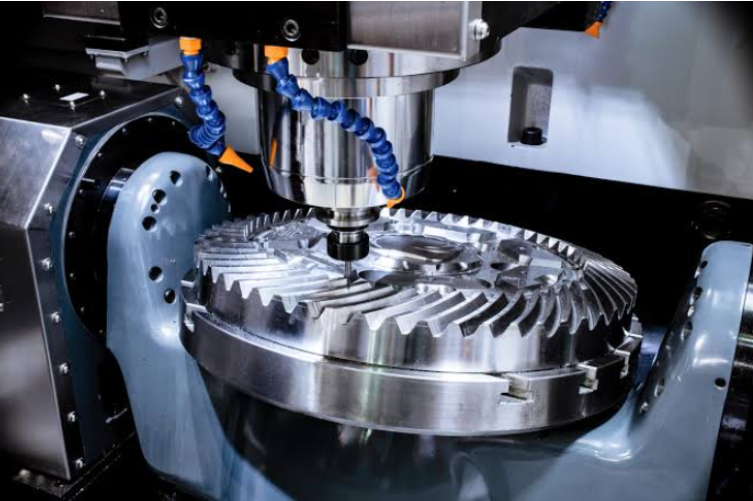
For cutting, shaping and finishing raw material into precise parts, a CNC machining company makes use of computer controlled equipment, which serves industries like automotive, aerospace, medical and manufacturing. Rather than manual operation, these companies depend on programmed instructions, and because of this, components can be produced with tight tolerances, repeatable accuracy and consistent quality, whether the production run is large or small. Modern manufacturing has come to rely heavily on this process, mainly because human error involved in traditional machining gets reduced, while at the same time, production speed increases in a noticeable way.
How CNC Machining Works
Computer Numerical Control, this is what CNC actually stands for. To put it simply, movement of the machine, whether for cutting, drilling or shaping, gets directed by a computer program, and this program is based on a digital design file, which is usually made through CAD or CAM software. So instead of a machinist adjusting tools by hand, the software takes over this control.
Generally, these are the steps followed in the process:
- Through CAD software, a design gets created digitally
- Into machine readable code, this design then gets converted
- Into the machine, the material is loaded
- Programmed movements are executed by the machine, for cutting or shaping the part
- For accuracy, the finished part undergoes inspection
Because of this method, shapes that are extremely detailed and complex can be achieved, something that would be quite difficult, or nearly impossible, by hand.
What Materials Can Be Machined
A wide range of materials can be worked with through CNC machining, and each one suits different applications. Among the common materials are:
- Aluminum
- Stainless steel
- Titanium
- Brass
- Plastics, such as nylon and acrylic
- Composite materials
Depending on what strength, weight and durability the final product requires, the material choice is often decided.
Why Precision Matters in Manufacturing
One of the main reasons industries depend so much on machined parts is precision. A component can fail even from a slight deviation in size or shape, and this becomes especially critical in fields like aerospace or medical devices, where safety cannot be compromised. Often, tolerances that machined parts need to meet are measured in fractions of a millimeter, and only through automated, computer guided processes, this level of accuracy becomes achievable.
What Types of CNC Machines Are Used
Depending on how complex the part being produced is, several types of machines get used.
- CNC milling machines, where material removal happens using rotating cutting tools
- CNC lathes, where the material rotates while shaping is done by a cutting tool
- CNC routers, which are often used for softer materials like wood or plastic
- Multi axis machines, through which complex geometries can be cut from multiple angles, all in a single setup
Depending on the shape, size and material of the part, each machine type has its own specific purpose.
What Industries Rely on CNC Machining
For their daily operations, many sectors depend on machined components, including:
- Automotive manufacturing
- Aerospace engineering
- Medical device production
- Electronics
- Industrial equipment manufacturing
- Defense and military applications
Parts meeting strict regulatory and safety standards are required by these industries, and this is exactly why machining accuracy holds such importance.
How Quality Is Ensured During Machining
In the machining process, quality control plays a major role. To verify that finished parts match the original design specifications, tools like calipers, micrometers and coordinate measuring machines get used by reputable manufacturers. For maintaining consistency across every batch produced, many facilities also follow industry certifications along with quality management systems.
Common Questions About CNC Machining
Is CNC machining suitable for small production runs?
For both small batch production and larger scale manufacturing, yes, CNC machining works well, since whenever needed, the programmed instructions can be reused again.
Can CNC machining produce complex shapes?
Yes, specifically for creating intricate geometries, multi axis machines are designed, geometries that would be extremely difficult to achieve through manual work.
How long does it take to machine a part?
On the design complexity, the material being used, and how many parts are required, production time mostly depends. Components that are simple can be produced fairly quickly, while due to the number of operations involved, intricate designs may take a longer time.
What is the difference between CNC milling and CNC turning?
In milling, a rotating cutting tool shapes material that stays stationary, whereas in turning, the material itself rotates against a cutting tool that remains fixed.
Final Thoughts on CNC Machining
Why this method still remains a preferred choice across so many industries becomes clearer once the production process of machined parts is understood. Advanced technology, skilled programming and strict quality control, all of this gets combined by a cnc machining company, so that exact specifications are met by parts, every single time. As manufacturing demands keep growing further, on precise, computer controlled machining processes, reliance is expected to increase even more, and because of this, it remains an essential part of modern industrial production.