



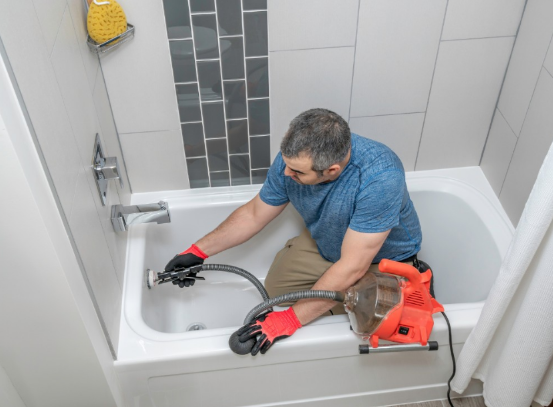
Gold Coast bathrooms age in a particular way. The climate does not help — humidity, heat, and the kind of ventilation that older Queensland homes were never really designed for accelerate surface deterioration faster than homeowners expect. A bath that looked acceptable five years ago now has a crazing pattern across the enamel, a stain […]
Gold Coast bathrooms age in a particular way. The climate does not help — humidity, heat, and the kind of ventilation that older Queensland homes were never really designed for accelerate surface deterioration faster than homeowners expect. A bath that looked acceptable five years ago now has a crazing pattern across the enamel, a stain around the plug that no cleaning product has touched, and a colour that was already slightly wrong when it was installed. The assumption is always that replacement is the only credible fix. Bath resurfacing in Gold Coast challenges that assumption directly, and the gap between what people think it is and what it actually delivers tends to surprise people once they understand the process properly.
Why Replacement Is Oversold
The bathroom renovation industry has a vested interest in replacement. New baths get specified, delivered, and installed – and the trade margin at each stage reflects that. What rarely gets explained clearly to homeowners is what a bath replacement actually involves beyond the fitting itself. The existing bath needs to be broken out or removed whole, which in older Gold Coast homes with tiled surrounds frequently means taking surrounding tiles with it. Those tiles then need to be matched or replaced entirely. The wall behind the bath, exposed for the first time in decades, often reveals issues that were not in the original quote. What began as a straightforward replacement expands predictably, and the final figure looks nothing like the initial conversation.
What the Process Actually Involves
Resurfacing gets dismissed as a superficial fix by people who have never seen it done properly. The surface preparation stage alone dispels that impression quickly. Existing enamel or acrylic is abraded thoroughly to create mechanical adhesion. Chips and cracks — including deep ones that have penetrated to the substrate — are filled with compatible repair compounds and built up in layers until they are flush with the surrounding surface. Crazed enamel, which looks like a network of fine cracks across older baths, is addressed at the substrate level rather than coated over. Bath resurfacing in Gold Coast done by experienced applicators, is a surface rebuild, not a paint job, and the distinction matters considerably for longevity.
The Colour Problem Nobody Mentions
Gold Coast properties built across several decades carry the bathroom colour palettes of their era with remarkable fidelity. Avocado. Harvest gold. A particular shade of pale pink that seemed reasonable at the time. These colours are not simply unfashionable — they actively work against a property’s presentation in ways that affect rental appeal and sale perception. Replacement is one solution. Resurfacing to a contemporary white, grey, or custom-specified colour is another — and it achieves the same visual result without removing a structurally sound bath that has another decade of serviceable life remaining in it.
Damage That Looks Worse Than It Is
There is a specific category of bath damage that sends homeowners straight to the showroom when they do not need to be there. Bath resurfacing handles deep chips; surface crazing, mineral staining that has penetrated the original glaze; and discolouration from decades of use — all conditions that look terminal and are not. The critical factor is whether the structural integrity of the bath itself is sound. If the underlying cast iron or acrylic is not compromised, the surface condition — however bad it appears — is a resurfacing problem rather than a replacement problem. Most baths that get replaced on cosmetic grounds do not need to be.
The Rental Market Reality
Gold Coast’s rental market is assessed quickly and remembered in impressions rather than details. Prospective tenants form a view of a bathroom within moments of walking in, and a discoloured or visibly worn bath colours that impression in ways that affect both letting speed and the calibre of applicant a property attracts. Landlords who resurface between tenancies consistently report faster letting and fewer maintenance complaints related to bathroom presentation.
Conclusion
Bath resurfacing in Gold Coast solves a problem that most homeowners have been approaching from entirely the wrong direction. Replacement is loud, expensive, and disruptive in ways that compound unexpectedly. Resurfacing is precise and fast and produces a durable result from a surface that looked beyond saving. The bathrooms that benefit most are the ones where the structure is sound, and the surface has simply been beaten by time, which describes the majority of Gold Coast homes more accurately than most owners realise.