





There is a particular kind of frustration that comes from a garage door that fights back every single morning. The swing clips the bumper. The springs give out after a rough winter. A draught creeps under the bottom seal, and the room next door feels cold by mid-morning. Most homeowners put up with all of […]
There is a particular kind of frustration that comes from a garage door that fights back every single morning. The swing clips the bumper. The springs give out after a rough winter. A draught creeps under the bottom seal, and the room next door feels cold by mid-morning. Most homeowners put up with all of this far longer than they should, simply because replacing a garage door feels more complicated than it actually is. Sectional garage doors tend to solve most of these problems quietly and without fuss — and understanding why makes the decision considerably easier.
The Driveway Issue Nobody Raises
Traditional up-and-over doors need space to swing outward before they lift. Park the car slightly too close, and the door simply will not open fully. On a sloped driveway, the problem gets worse. In winter, standing outside in the rain while shuffling the car backwards is the kind of small misery that adds up over time. Sectional doors travel straight up along a ceiling track. No outward movement whatsoever. The driveway stays completely usable right to the edge of the opening, which sounds minor until it becomes part of the daily routine.
Security That Works Structurally
Most people assume a locked door is a locked door. It is not quite that straightforward. Traditional doors with a single central locking point can be compromised by applying pressure to the lower corners — a method that leaves very little visible evidence. Sectional garage doors interlock at every panel joint when fully closed. Resistance spreads across the entire structure rather than sitting at one vulnerable spot. When multi-point locking runs through the track as well, the door becomes genuinely difficult to force. That is a structural difference, not just a marketing claim.
What a Cold Garage Actually Does to a Home
A freezing garage is rarely treated as a serious problem. It probably should be. Cold air migrates through shared walls and floors into adjoining rooms, quietly pushing up heating demand without any obvious cause. Tools left inside corrode faster than expected. Stored items deteriorate. Any ambition to use the space as a workshop or home gym gets abandoned somewhere around November. Insulated sectional garage doors create a thermal barrier between the panel layers that keeps internal temperatures far more stable through winter. Homeowners who have made this switch often describe it as the single change that made the garage genuinely usable rather than just technically accessible.
They Hold Up Differently Over Time
This is something that only really becomes clear after years of ownership rather than weeks. Up-and-over doors rely on a single torsion spring to carry the full counterbalancing load of the door. When that spring goes — and eventually it always does — the door stops working entirely until a replacement part arrives. Sectional doors spread the mechanical load across multiple springs and hinges. Individual components wear gradually. They can be replaced one at a time without the whole system failing suddenly. For something used several times every single day, that difference in reliability becomes very significant over the years.
Looking Good Without Sacrificing Anything
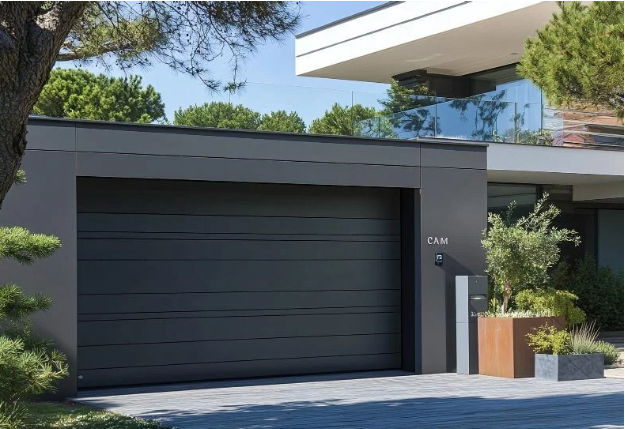
There is a persistent assumption that choosing a door for practical reasons means accepting something visually dull. Sectional doors have largely put that idea to rest. Timber-effect finishes work well on older period properties without looking like an obvious replacement. Flush steel panels suit contemporary builds cleanly. The operating mechanism sits above the opening and out of sight, leaving the front of the property looking uncluttered. Unlike roller doors, which bunch visibly into a drum above the entrance, sectional doors simply disappear into the ceiling space and leave nothing awkward behind.
Conclusion
Garage doors reveal their quality slowly, through repetition and daily use rather than a single impressive moment. Sectional garage doors hold up to that kind of scrutiny better than most alternatives on the market. They remove the small daily frustrations that come with poorly designed fittings, offer security that is built into the structure itself, and manage temperature in a way that genuinely affects the comfort of the wider home. For something replaced only rarely in a lifetime of homeownership, thinking it through properly is time well spent.