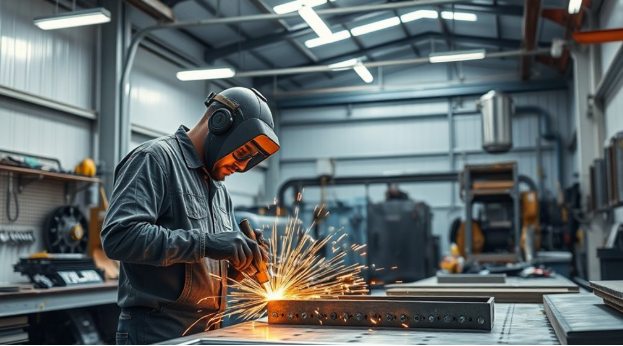
Most businesses underestimate how much their manufacturing partner influences their final product’s success. The difference between a mediocre component and an exceptional one often comes down to the fabricator’s understanding of real-world applications. Metal fabrication services aren’t just about cutting and welding anymore. They’re about solving problems you didn’t even know existed until production began.
Enhanced Precision
Precision isn’t just about hitting measurements. A bracket might be dimensionally perfect but still fail if the fabricator doesn’t account for thermal expansion during welding. The metal warps, holes misalign, and suddenly your assembly line stops.
Experienced fabricators pre-compensate for these changes. They know that certain alloys behave differently under heat. Their techniques adjust accordingly. This knowledge separates functional parts from problematic ones that cause headaches down the track.
Time Efficiency
The fastest fabricator isn’t always the best choice. The right one saves you time in unexpected ways. A skilled team spots design flaws before production starts. They’ll notice that your bracket design requires unnecessary setups. They’ll suggest relocating a weld point to improve access.
These small adjustments prevent delays that compound throughout production. You’re not just buying speed. You’re buying foresight that keeps projects moving forward without constant interruptions and revisions.
Customisation Options
Standard solutions rarely fit non-standard problems. Mining companies need conveyor components that handle abrasive materials in humid environments. Off-the-shelf options either corrode quickly or wear down fast.
Custom fabrication allows for specialised coatings and reinforced stress points. Metal fabrication services create solutions that last years instead of months. That’s the real value of customisation. It solves the specific problem you actually have, not some generic industry challenge.
Material Versatility
Material selection makes or breaks a project. Many businesses make expensive mistakes here. Aluminium seems perfect until your application involves regular contact with certain chemicals. Stainless steel looks ideal until you calculate the weight implications.
Good fabricators challenge your material choices when warranted. They’ve seen what happens when companies choose based on assumptions. Their experience includes options you probably haven’t considered. This guidance prevents costly do-overs and material failures.
Structural Integrity
Structural failure rarely announces itself during inspection. It happens later when vibration fatigues a weld. An unexpected load finds the weak point in your design. Professional fabricators think about failure modes before they occur.
They reinforce joints that will experience repetitive stress. They specify weld types based on the forces components will actually face. This anticipatory approach prevents problems that only reveal themselves under real operating conditions, not in controlled testing environments.
Scalability Solutions
Scaling production exposes every shortcut taken during prototyping. A design that works beautifully for small batches becomes nightmarish at volume. Fabricators who understand scalability design with production in mind from the start.
They avoid complex setups that slow everything down. They suggest modifications that make quality control easier at scale. They think about how your product will be manufactured before thinking about whether it can be manufactured at all.
Design Innovation
Innovation isn’t about complexity. It’s about cleverness. Sometimes the best solution involves removing material rather than adding it. A well-placed relief cut can eliminate stress concentrations that would otherwise require expensive heat treatment.
Strategic use of formed sections can replace welded assemblies entirely. Fabricators who truly understand their craft see these opportunities. They approach each project asking not just how to make something, but how it should actually be made for best results.
Quality Assurance
Quality control catches mistakes after they happen. Quality assurance prevents them from occurring in the first place. There’s a fundamental difference between these approaches. Checking dimensions after welding is reactive. Fixturing parts properly so they can’t be welded incorrectly is proactive.
The best fabricators build quality into their processes. Their setup procedures prevent errors rather than simply detecting them. This saves time, materials, and the frustration of discovering problems too late.
Conclusion
Choosing metal fabrication services really comes down to finding a partner who thinks beyond the drawings. The technical capability to cut and weld metal is common enough. What’s rare is the experience to anticipate problems and the honesty to challenge flawed assumptions. Your fabricator should make your product better, not just make your product. That’s the transformation worth pursuing in any manufacturing partnership.